
Use the 120° rule: add the air temperature and the water temperature together, and if the total is under 120°F, dress for immersion in a wetsuit or drysuit. A 65-degree afternoon over 50-degree water adds up to 115 — that is wetsuit weather, no matter how pleasant it feels on the dock.
That single number is the fastest way to decide what to wear for fall kayaking and stand-up paddleboarding in northern Illinois. Below is the full head-to-toe system, where the wetsuit and drysuit lines actually fall, and a checklist you can bring into the shop.
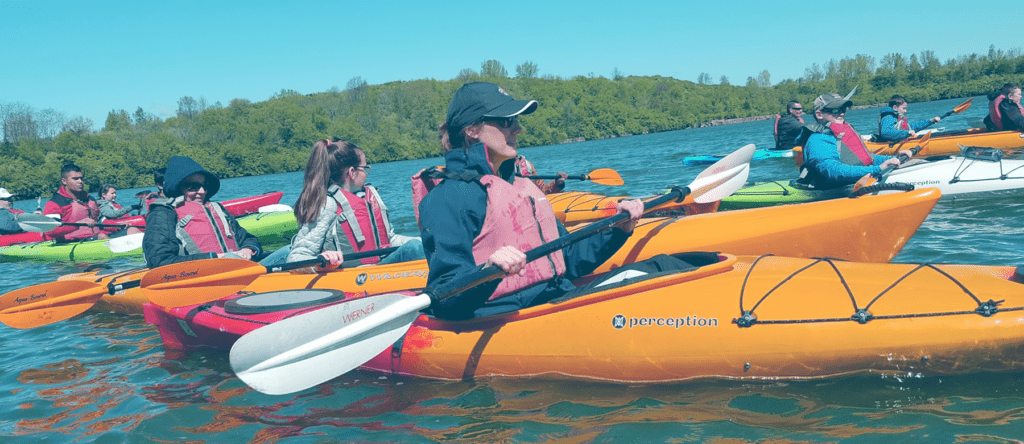
The 120° rule, explained
The rule is simple arithmetic:
Air temp (°F) + water temp (°F) < 120 → wear a wetsuit or drysuit.
It works because it forces you to account for the thing paddlers consistently ignore: the water. Air temperature is what you feel standing on the bank. Water temperature is what you get if you go in — and that is the number that decides how the day ends.
Rock River water temperatures typically slide through the 50s during October and into the 40s by early November. Run the math on a nice October Saturday:
| Conditions | Air + water | Verdict |
|---|---|---|
| 72°F air, 62°F water (late September) | 134 | Layers are fine |
| 68°F air, 55°F water (mid-October) | 123 | Borderline — layers plus a splash top |
| 60°F air, 52°F water (late October) | 112 | Wetsuit or drysuit |
| 45°F air, 44°F water (November) | 89 | Drysuit territory |
A more conservative version of the rule — used by a lot of instructors and worth adopting if you paddle alone or far from shore — drops the threshold to 100 and adds a hard floor: if the water is below 60°F, dress for immersion regardless of the air temperature.
Why cold water is the real risk
Hypothermia is the danger everyone names. It is not the one that gets people.
Sudden immersion in water below about 60°F triggers cold shock: an involuntary gasp followed by a minute or two of hyperventilation you cannot control. If your head is underwater during that gasp, you inhale water. This is why the first minute matters more than the next hour, and why a PFD you are actually wearing is the single most important piece of cold-water gear you own.
After the gasp reflex passes, you have roughly ten minutes of useful muscle function in your hands and arms to self-rescue before cold incapacitation sets in. Hypothermia takes an hour or more. The order matters — dress and plan for the first minute.

A head-to-toe layering system for fall paddling
The principle: wick, insulate, block. Three layers, no cotton anywhere.
Base layer
Synthetic (polyester, polypropylene) or merino wool, worn next to skin. Its job is to move sweat off you. Never cotton — wet cotton loses essentially all insulating value and actively pulls heat out of your body. A cotton t-shirt under a paddling jacket is one of the most common cold-water mistakes we see.
Mid layer
Fleece or a light synthetic insulated top. This is your adjustable layer — the one you shed at the halfway point when you have warmed up, and put back on when the sun drops behind the trees. Bring it even if you do not think you will need it.
Outer layer
A paddling jacket or splash top. Wind on the water is the thing that turns a comfortable 60-degree day into a miserable one, and a splash top blocks both wind and the spray coming off your paddle. Look for neoprene or latex gaskets at the wrists and neck to keep water from running down your arms on every stroke.
Footwear
Neoprene booties are the right answer. Failing that, wool socks inside closed-toe water shoes. Your feet sit in the wettest part of the boat and they are the first thing to go numb. Never paddle in flip-flops past September.
Hands
Paddling gloves or neoprene pogies once air temperature drops into the 50s. Pogies — sleeves that attach to the paddle shaft — let you keep skin-on-shaft grip while staying warm, which most paddlers prefer over gloves.
Head
A warm synthetic or wool beanie under your hat brim. If you are paddling in water cold enough to warrant a drysuit, add a neoprene hood or skull cap; head immersion is where cold shock hits hardest.
Wetsuit vs. drysuit: which one, and when
The short version: a wetsuit keeps you alive in cool water, a drysuit keeps you comfortable in cold water.
| Wetsuit | Drysuit | |
|---|---|---|
| How it works | Traps a thin layer of water your body warms | Waterproof shell with gaskets; you insulate underneath |
| Best water range | 55–65°F | Below 55°F |
| Comfort out of the water | Clammy, restrictive, warm when wet | Comfortable, adjustable, breathable |
| Cost | Lower | Higher |
| Best for | Shoulder-season paddling, SUP, occasional swims | Late fall and winter paddling, long exposure, wind |
For northern Illinois, that maps cleanly onto the calendar. A 3/2mm farmer john wetsuit covers September and most of October. Once you are paddling in November — or you are on a paddleboard, where falling in is part of the sport — a drysuit is the better investment.
Two notes people get wrong:
- A drysuit does not keep you warm. It keeps you dry. You still layer fleece and synthetics underneath, and if you dress light under a drysuit you will be cold.
- A farmer john wetsuit (sleeveless) is usually better than a full wetsuit for paddling, because it leaves your shoulders free. Add a splash top over it for wind.
Don't skip this: PFD fit over bulky layers
Here is the step almost everyone misses. A PFD that fit you in July over a t-shirt will not fit correctly in October over a fleece and a drysuit.
Bulky layers change your torso circumference by several inches. A PFD that is loose rides up over your ears in the water — exactly when you need it holding your chin above the surface. Refit it:
- Put on your actual fall paddling layers, including the outer shell.
- Zip the PFD and snug all side straps from the bottom up.
- Have someone pull straight up on the shoulder straps. If the PFD moves more than an inch or so, tighten it.
- Check that the shoulders do not press against your ears when you raise your arms overhead.
If you cannot get it snug over your layers, you need a different size or a different cut. Bring your fall layers into the shop and we will fit it properly — this takes about ten minutes and it is the highest-value ten minutes of your fall paddling season.
Cold-water gear checklist
| Item | When you need it | Notes |
|---|---|---|
| PFD (refitted over layers) | Always | Worn and zipped, not stowed |
| Synthetic or wool base layer | Air below 65°F | No cotton, ever |
| Fleece mid layer | Air below 60°F | Removable — bring it regardless |
| Paddling jacket / splash top | Any windy day | Wrist and neck gaskets matter |
| Wetsuit (3/2mm farmer john) | Water 55–65°F | Shoulder season workhorse |
| Drysuit | Water below 55°F | Layer underneath; it does not insulate |
| Neoprene booties | Air below 60°F | Or wool socks in closed-toe shoes |
| Paddling gloves or pogies | Air below 55°F | Pogies preserve grip feel |
| Warm hat / neoprene skull cap | Air below 55°F | Major heat loss point |
| Dry bag with full change of clothes | Always in fall | Sealed, in the boat |
| Whistle and headlamp | Always in fall | Short days, low light |
| Phone in waterproof case | Always | Plus a float plan told to someone |
Print it, screenshot it, or bring it in and we will walk the list with you.
What we carry and how to get fitted
Rocktown Adventures stocks paddle clothing, PFDs, footwear, and cold-weather gear from brands including NRS, Outdoor Research, and Oboz, along with 30-plus other outdoor brands across kayaks, paddles, and camping gear.
Cold-water gear is the category where buying online most often goes wrong. Wetsuit and drysuit fit is unforgiving — too loose and a wetsuit flushes cold water through it on every stroke; too tight and you cannot rotate your torso to paddle. PFD fit over layers has to be checked in person. Come in with the layers you actually paddle in, and we will get you into the right size the first time.
We also run cold-water safety instruction and paddlesports lessons for people moving into shoulder-season paddling for the first time.

Frequently asked questions
At what temperature do I need a wetsuit?
Use the 120° rule: add air temperature and water temperature in Fahrenheit, and if the total is below 120, wear a wetsuit or drysuit. As a hard floor, dress for immersion any time water temperature is below 60°F regardless of how warm the air is. A 3/2mm farmer john wetsuit covers water in the 55–65°F range.
Wetsuit or drysuit for kayaking?
Choose a wetsuit for water between 55 and 65°F and a drysuit for water below 55°F. A wetsuit traps and warms a thin layer of water against your skin; a drysuit seals water out entirely and you insulate with layers underneath. Drysuits are more comfortable and more expensive, and are the better choice for late-fall and winter paddling in northern Illinois.
Can I just wear my regular winter clothes?
No. Cotton and standard winter coats lose their insulating value when wet and become dangerously heavy in the water. Cold-water paddling gear is built to insulate while wet and to let you swim in it. Use synthetic or wool layers under a paddling jacket, and a wetsuit or drysuit once water drops below 60°F.
What is the 120 rule?
The 120 rule is a cold-water safety guideline: add the air temperature and the water temperature in Fahrenheit, and if the sum is less than 120, wear a wetsuit or drysuit. It exists because paddlers dress for the air they feel rather than the water they would land in. A stricter version of the rule uses 100 as the threshold.
Get fitted before the water drops into the 40s
Fall paddling is the best paddling of the year in northern Illinois — but only if you are dressed for the water instead of the weather. Bring your layers into the shop and we will fit your PFD, size your wetsuit or drysuit, and walk you through the checklist above.
Rocktown Adventures · 313 N. Madison Street, Rockford, IL 61107 · (815) 636-9066
Tuesday–Friday 10 a.m.–6:30 p.m. · Saturday 10 a.m.–5 p.m. · Sunday 11 a.m.–5 p.m. · Closed Monday (open by appointment)
